What is the difference between PageSpeed Insights lab results and field results?
- WordPress performance

When optimizing for website speed and Core Web Vitals, you’ll often come across two sections on the results:
- Discover what your real users are experience, that we will refer to as “field results”
- Diagnose performance issues, that we will refer to as “lab results”
At first glance, they might seem similar. But there are not.
Yes, both will give a reading on performance, but their use case and the accuracy of the data they provide is different.
What is lab data?
Lab data is synthetic. It’s generated in a controlled environment, using preset device and network conditions.
That concept is used on all auditing tools.
You will find it on Lighthouse, regardless if it’s run on PageSpeed Insights or Chrome DevTools.
You will also find something similar on popular testing tools, like:
- WebPageTest
- GTmetrix
It’s a test to simulate a page load and measure how it performs.
On PageSpeed Insights context, this data will sit at the second part of the report.
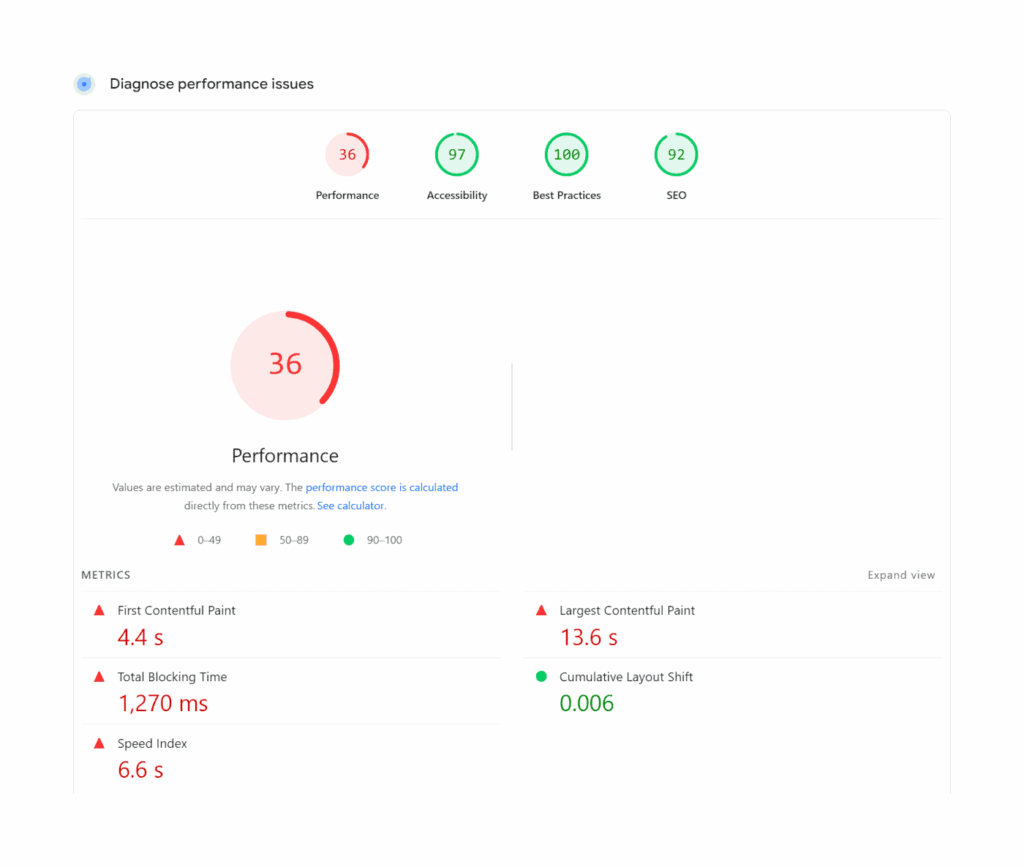
Characteristics of lab data:
- Collected instantly, on demand
- Simulates a single visit (usually on a mid-range mobile device and slow network)
- Always consistent, repeatable
- Useful for debugging and isolating specific problems
- Not affected by actual user behavior or variability
Common lab metrics include:
- First Contentful Paint (FCP)
- Largest Contentful Paint (LCP)
- Cumulative Layout Shift (CLS)
- Total Blocking Time (TBT)
What is field data?
Field data is collected from actual users visiting your site.
It can be part of a Real-User monitoring (RUM) tool, or anonymously collected from Chrome browsers through the Chrome UX Report (CrUX) initiative.
On PageSpeed Insights context, this data will sit at the top of the report.
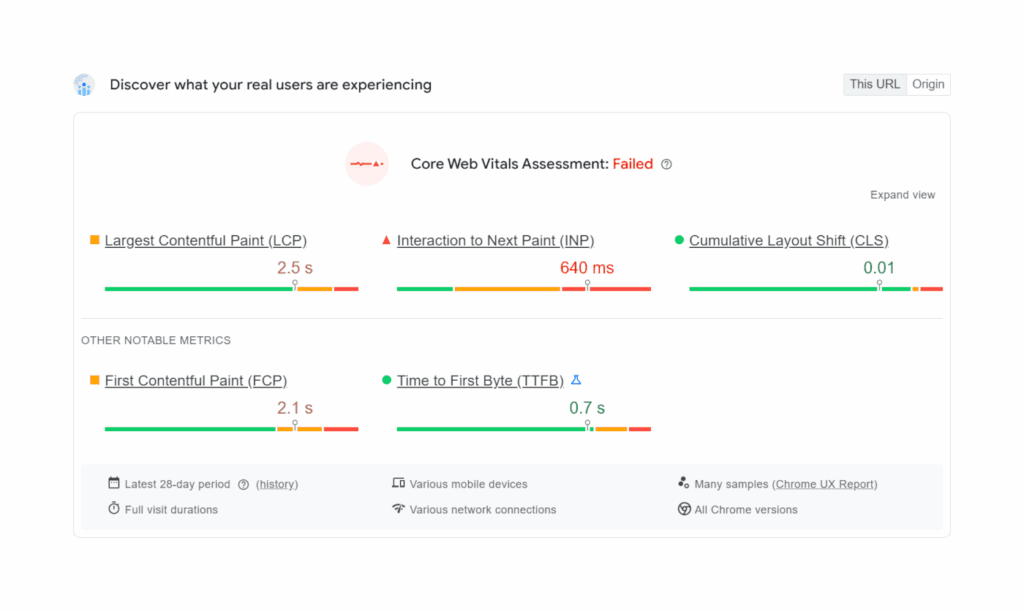
Characteristics of field data:
- Reflects actual user experiences
- Aggregated over the past 28 days
- Varies by region, device, connection, and user behavior
- Used directly by Google in SEO ranking algorithms
Field data powers the Core Web Vitals assessment:
- LCP (Largest Contentful Paint)
- INP (Interaction to Next Paint)
- CLS (Cumulative Layout Shift)
And also shows additional important web vitals metrics:
- FCP (First Contentful Paint)
- TTFB (Time to First Byte)
Key differences at a glance
| Feature | Lab Data | Field Data |
|---|---|---|
| Source | Simulated test run on Lighthouse | Real users on real devices |
| Timing | Instant, on demand | Aggregated over past 28 days |
| Consistency | High: same conditions every time | Variable: depends on user location, device, and internet speed |
| Use cases | Debugging, development, regression testing | Measuring real-world performance |
| Shown in PSI | Bottom section | Top section |
| Used in rankings | ❌ No | ✅ Yes |